
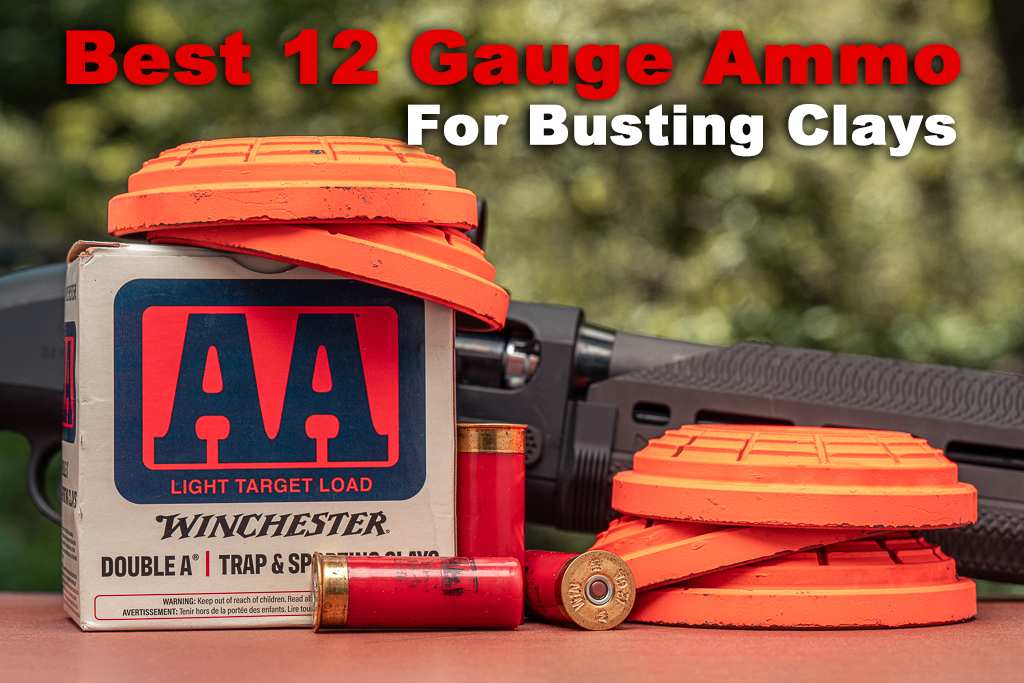
We sometimes joke that sporting clays is golf with a shotgun. That means you need to select the right ammo instead of the right clubs, but it’s easy to do once you know what to look for.
Sporting clays is set up to simulate the unpredictability of shooting live targets. One sporting clays station might launch clays out of a thicket to mimic the flight of flushing grouse; another might roll the clay across the ground like a rabbit bolting for its borrow. Because of this, the top 12 Gauge sporting clays ammo list is pretty similar to the shells you’d take on an upland game hunt. You could make do with a dove or grouse load at a sporting clays course, but most shooters prefer a dedicated target shooting shell – unless they’re practicing for an upcoming hunt, and want to familiarize themselves with the same ammo they’ll fire out in the field.
Best 12 Gauge Ammo for Sporting Clays
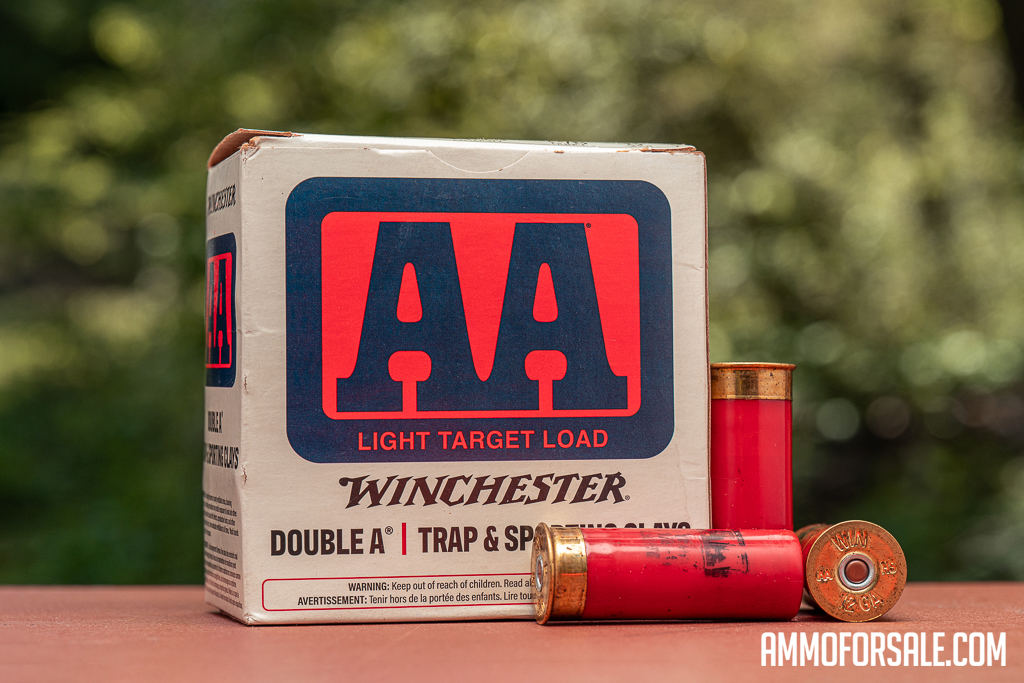
We’re glad you asked! This isn’t an exhaustive list of the best 12 Gauge ammo for sporting clays by any means, but it will give you a good idea of what to look for during your search.
Winchester AA Super Sport
12 gauge, 2-3/4” 1-1/8oz #7-1/2 shot (Xtra-Lite) Ammo
Muzzle Velocity: 1,300 fps
Federal Top Gun (#8 Shot)
12 gauge, 2-3/4” 1-1/8oz #8 shot Ammo
Muzzle Velocity: 1,200 fps
Federal Top Gun (#9 Shot)
12 gauge 2-3/4” 1-1/8oz #9 shot Ammo
Muzzle Velocity: 1,145 (for lighter felt recoil)
It’s good to experiment with a few different types of sporting clays ammo so you can see what’s out there. Once you pattern your shotgun correctly and get a few rounds under your belt, you’ll start to notice the differences that shot sizes and muzzle velocities create.
What Kind of 12 Gauge Ammo Can You Use for Sporting Clays?
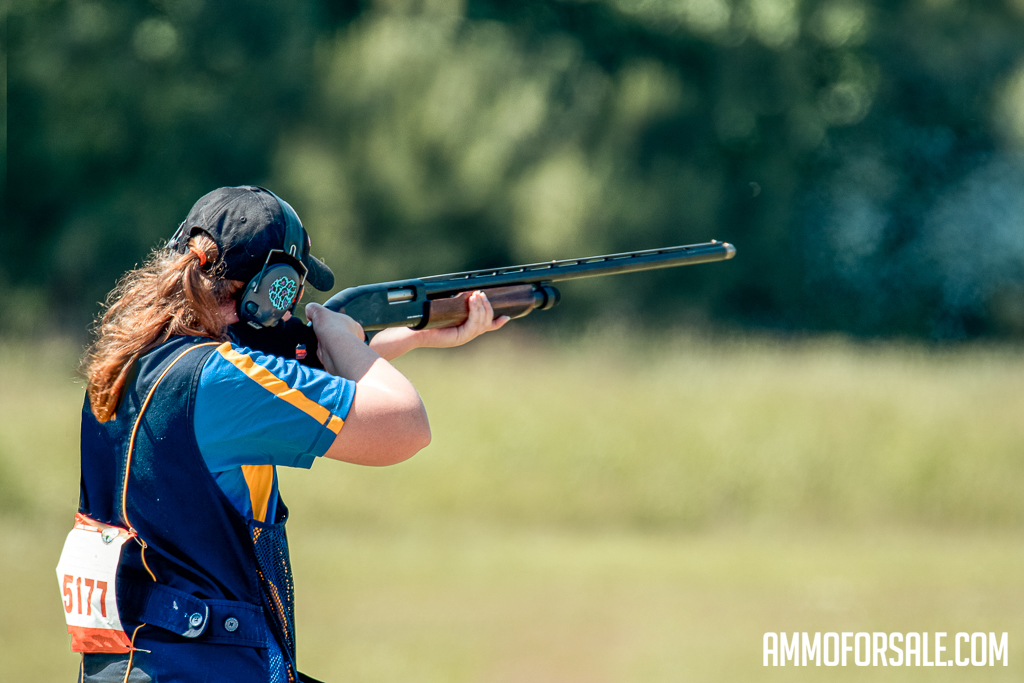
The National Sporting Clays Association (NSCA) tells us that all manufacturers’ shotshells can be used, with the exception of three competitive events which prohibit handloaded ammo. You can’t use black powder, visual training loads, tracking devices or tracers at a NSCA registered event, but that hardly restricts what you’re allowed to do on your own time.
The NSCA specifies the maximum lead shot weight for all the most popular shotshell gauges:
- 12 Gauge – 1-1/8 ounce
- 20 Gauge – 7/8 ounce
- 28 Gauge – 3/4 ounce
- 410 Bore – 1/2 ounce
The NSCA further specifies which shot size they allow you to use for sporting clays. For lead shot you can use #9, #8-1/2, #8 or #7-1/2. For steel shot, you can use any size between #9 and #6. Plated shot (such as lead shot that has been hardened via copper plating) is permitted. Only normal spherical shot is allowed (meaning you can not use ammo like Federal Black Cloud which has features shaped FliteStopper pellets).
Interestingly, the NSCA does not have a shotshell length requirement. You could theoretically play with 1-3/4” shells up to 3-1/2” shells, so long as they are loaded with no more than 1-1/8 ounces of shot (in the case of 12 Gauge).
What Kind of 12 Gauge Ammo Is Best for Sporting Clays?
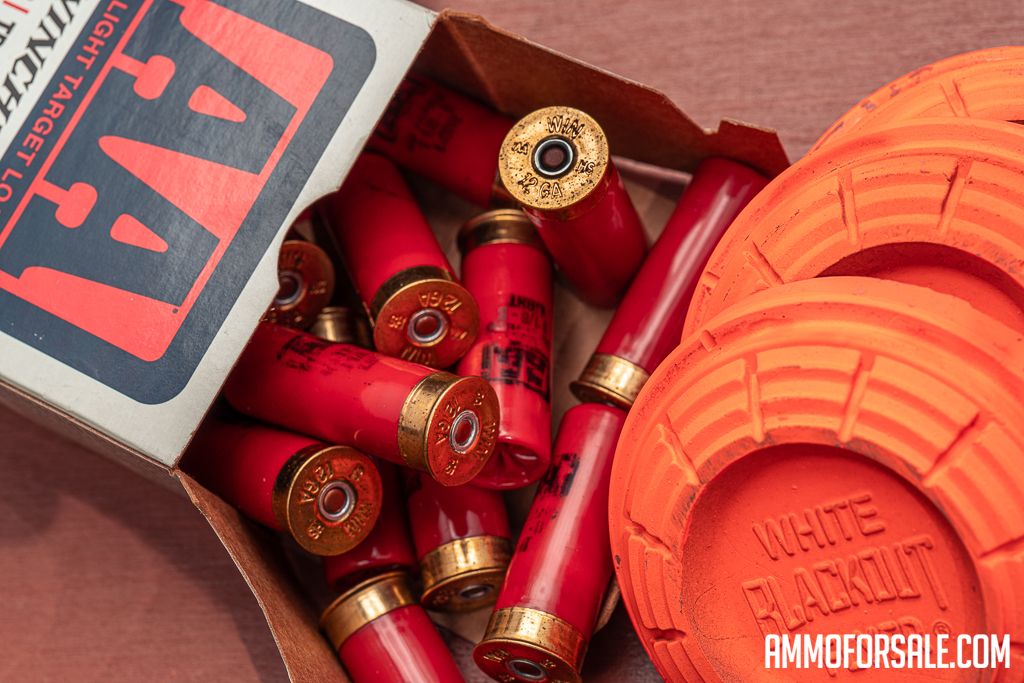
If you’re reading this, then odds are you aren’t losing sleep at night worrying about NSCA regulations. But their rules do provide a good guideline on what to look for. Most everyone adheres to the 1-1/8 ounce weight limit for 12 Gauge ammo, and they prefer sticking to the #9 to #7-1/2 window simply because those shot sizes are most effective for playing the game.
You get some wiggle room in the shot size department. The size range is 0.080″ diameter (#9) to 0.095” diameter (#7-1/5). In general, smaller shot like #9 provides an advantage at closer ranges. 1-1/8 ounces of #9 shot contains about 658 individual shot pellets. #9 shot thus creates a high-density spread up close, although the lighter pellets lose momentum too rapidly to be of much help at stations which present longer-distance challenges.
#7-1/2 shot provides an effective pattern for sporting clays as well. With approximately 393 shot pellets to a 1-1/8 ounce load it doesn’t deliver nearly as dense a spread as you would get with #9 shot. It will, however, give you an advantage at engaging targets toward the edges of a station’s range. #8 shot (and much less frequently used #8-1/2 shot) splits the difference between the two extremes.
Velocity Considerations
What muzzle velocity is best for sporting clays? The NSCA doesn’t specify any muzzle velocity requirements, but most of us consider anywhere between 1,200 and 1,300 feet per second normal. This will give you a good range with sufficient energy to shatter distant clays on impact, but it will also avoid punishing you with very strong recoil.
Smaller shooters and shooters who are averse to recoil may select a lower velocity shell for comfort reasons. Selecting a lighter shot weight will also lessen felt recoil. (If you’re firing a semi-automatic, make sure your combined shot weight and muzzle velocity are sufficient to fully cycle the action.)
In fewer words, the best 12 Gauge sporting clays ammo has no more than 1-1/8 ounces of #9, #8-1/2, #8 or #7-1/2 lead shot, with a muzzle velocity between 1,200 and 1,300 fps.
Final Thoughts
You may want to bring along a few different shells during a single round, just so you can experience how larger shot pellets excel at long-range and smaller ones are better for up-close shooting. Just make sure your pals are okay with you switching up your ammo if you’re playing a halfway serious round of sporting clays! You can see our entire line-up of in-stock 12 gauge shells for sale here.
Leave A Comment